Exploring communication styles
This test groups common behavior patterns into red, blue, yellow, and green styles. It offers a quick way to explore how you express yourself, make decisions, relate to others, and respond to pressure.
This 40-item self-assessment explores red, blue, yellow, and green personality tendencies.
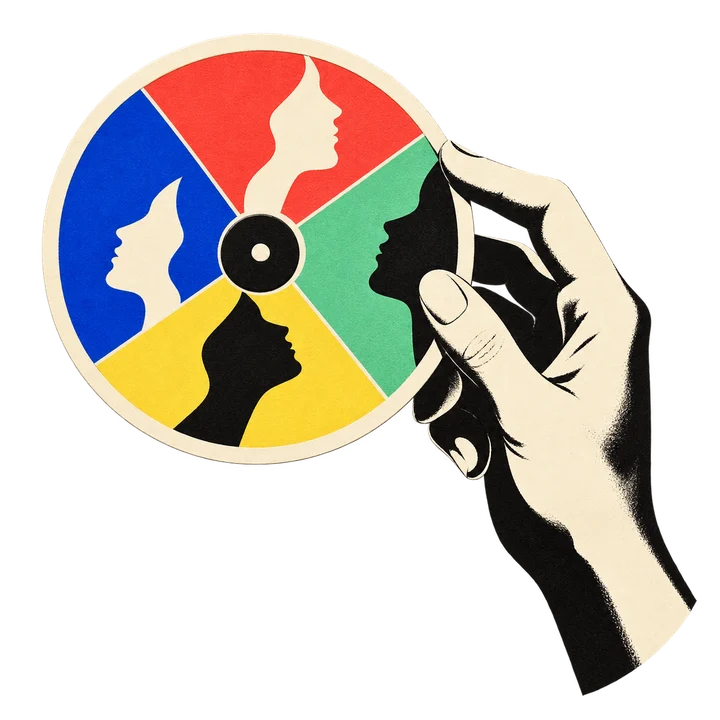
For self-understanding. Not a professional diagnosis.
This 40-item self-assessment explores red, blue, yellow, and green personality tendencies.
Personality color theory groups traits into four colors representing different behaviors and characteristics. This 40-item self-assessment covers red (goals, leadership, quick action, and challenges), blue (perfection, details, planning, and logic), yellow (optimism, expression, sociability, and creativity), and green (harmony, stability, listening, relationships, gentleness, and patience). Results identify your leading color and offer targeted development suggestions.
Explore your communication style and behavior through red, blue, yellow, and green personality profiles. 40 questions; about 10 minutes.
This test groups common behavior patterns into red, blue, yellow, and green styles. It offers a quick way to explore how you express yourself, make decisions, relate to others, and respond to pressure.
Use a color profile as a starting point for self-awareness and conversations about relationships. The test is intended for informal exploration rather than a clinical assessment.
A color is a framework for describing tendencies, not a complete account of who you are. Use the results to understand differences in interaction and improve communication while keeping your possibilities open.
Goal-oriented, a strong leader, quick to act, and drawn to challenges.
Perfection-seeking, detail-focused, organized, and logical.
Optimistic, expressive, sociable, and creative.
Steady and harmony-seeking, a good listener, relationship-focused, gentle, and patient.
This test is for learning and self-understanding. It cannot replace professional medical advice, diagnosis, or treatment. If you are in significant distress, seek help from a healthcare professional.
Explore more assessments like this
This 32-item self-assessment explores emotional traits, social tendencies, behavior patterns, and thinking style, then matches you with an animal type.

Based on the Big Five model, this 50-item self-report test assesses your personality and matches it with the zodiac sign that best fits your profile.
Assess your emotional intelligence across self-awareness, emotion management, self-motivation, empathy, and relationships.

Assesses four types of solitary behavior: positive solitude, social withdrawal, social avoidance, and loneliness.
The 40-item Chinese Big Five Personality Inventory Brief Version (CBF-PI-B), developed by Wang Mengcheng, Dai Xiaoyang, and colleagues, assesses neuroticism, conscientiousness, agreeableness, openness, and extraversion.

The 15-item Chinese Big Five Personality Inventory (CBF-PI-15), developed by Wang Mengcheng, Zhang Xintong, and colleagues, provides a quick assessment of neuroticism, conscientiousness, agreeableness, openness, and extraversion.